Resources
What Is a Torah Scroll?
Understanding the Meaning and Importance of a Sefer Torah
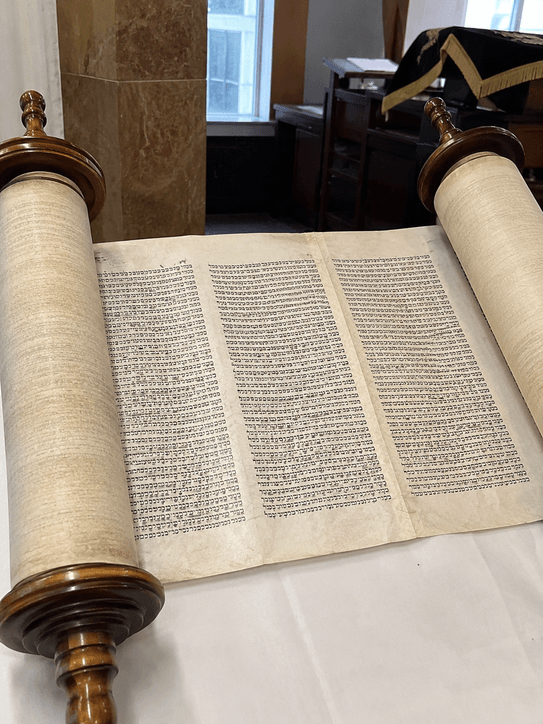
A Torah scroll, also known as a Sefer Torah, is one of the holiest objects in Judaism. Handwritten on kosher parchment by a trained Sofer STaM, a Torah scroll contains the Five Books of Moses—Genesis, Exodus, Leviticus, Numbers, and Deuteronomy.
Unlike printed books, every Torah scroll is written entirely by hand using traditional methods that have been preserved for centuries. Each Hebrew letter must be carefully formed according to Jewish law, making every Torah scroll a unique and sacred work of religious significance.
Today, Torah scrolls are used in synagogues around the world for public readings on Shabbat, Jewish holidays, and other important occasions.

How Is a Torah Scroll Made?
Creating a Sefer Torah is a detailed and sacred process that requires extensive training and dedication.
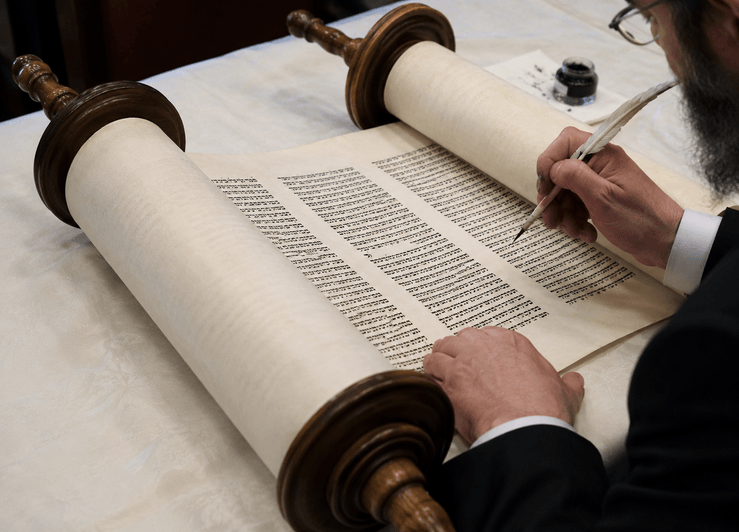
A certified Sofer STaM writes every Torah scroll by hand using:
- Kosher parchment
- Traditional black ink
- A specially prepared quill
- Strict halachic guidelines
Every one of the more than 304,000 Hebrew letters must be written correctly. If even one letter is missing or improperly formed, the Torah may require correction before it can be used for public reading.
Because of this precision, writing a Torah scroll can take many months—and in some cases more than a year—to complete.

Why Do Torah Scrolls Need Inspection?
Although Torah scrolls are carefully preserved, age and regular use can affect their condition.
Common issues include:
- Faded Hebrew letters
- Cracked ink
- Torn parchment
- Moisture damage
- Wear from handling
- Aging materials
Even a single damaged letter may affect the scroll’s kosher status.
Routine inspections performed by a certified Sofer STaM help ensure that Torah scrolls remain accurate, readable, and suitable for synagogue use.
If repairs are needed, many issues can be addressed through professional Torah scroll restoration while preserving the integrity of the original scroll.

Caring for a Torah Scroll
Proper care helps preserve a Torah scroll for future generations.
Helpful practices include:
- Store the Torah in a clean, dry environment.
- Handle the scroll carefully during readings.
- Protect it from excessive heat and humidity.
- Schedule periodic inspections by a qualified Sofer STaM.
- Address signs of damage as soon as they are discovered.
With proper maintenance, a Torah scroll can continue serving a congregation or family for many decades.

Learn More About Our Torah Services
House of Ishai provides professional services to help preserve and protect sacred Jewish writings.
Our services include:
- Torah Scroll Inspection
- Torah Scroll Restoration
- Torah Scroll Repair
- Tefillin Inspection
- Mezuzah Inspection
- Sofer STaM Services
Whether you care for a synagogue Torah or a family heirloom, we are committed to preserving its sanctity according to traditional Jewish law.
Frequently Asked Questions
What is the difference between a Torah scroll and a Sefer Torah?
There is no difference. “Sefer Torah” is the Hebrew name for a Torah scroll.
Who writes a Torah scroll?
A Torah scroll is written by a trained Jewish scribe known as a Sofer STaM.
How many letters are in a Torah scroll?
A Torah scroll contains more than 304,000 handwritten Hebrew letters.
How often should a Torah scroll be inspected?
Regular inspections are recommended, especially for Torah scrolls used frequently in synagogue services.